
December 29, 2025
by PharmaReviews
0 comments

SHAMOON CHAUDHARY ELECTED 16th PRESIDENT FOR PHARMACIST FEDERATION (PAKISTAN) TENURE 2026–2027

.

Pharmaceutical Review (Staff Reporter). The Pharmacist Federation (Pakistan) is pleased to announce the election of its new President for the 2026–2027 term, concluding the organization’s constitutional electoral process in accordance with established procedures.

Founded as the Pharmacist Forum in 1989 at the Faculty of Pharmacy, University of the Punjab, Lahore, the organization evolved into the Pharmacist Federation (Pakistan) in 2009. This transformation enabled a more unified and rational approach to representing the pharmacy profession, pooling resources to address key issues and foster collaboration across pharmaceutical sciences. Over the years, the Federation has built a proud legacy of pharmacists uniting for professional advancement, encompassing education, regulation, clinical practice, and therapeutic information dissemination. It has broadened its scope by welcoming graduating pharmacists as student members and non-pharmacists as affiliated or honorary members, while promoting scholarly activities, professional development, and enhanced pharmaceutical services in line with international standards.

With this declaration, the Federation has successfully completed its presidential election for the upcoming term. As a nationwide voice for innovative pharmacists, the Pharmacist Federation (Pakistan) remains committed to advocating positive change, supporting professional leadership, skill enhancement, and collaboration across practice, academia, and industry to deliver high-quality healthcare.

The Federation extends heartfelt congratulations to the newly elected president and looks forward to his leadership in advancing the professional, educational, and regulatory interests of pharmacists throughout the country. It also expresses appreciation for the cooperative and responsible engagement of all executive members while reaffirming its dedication to constitutional governance, professional excellence, and democratic principles within the organization.

For more information about the Federation, including its history, membership opportunities, and resources on pharmacy in Pakistan, please visit the official webpages.


December 29, 2025
by PharmaReviews
0 comments

PHARMACIST FEDERATION (PAKISTAN) CONCLUDES PRESIDENTIAL ELECTION FOR 2026–2027

Pharmaceutical Review (Staff Reporter) The Pharmacist Federation (Pakistan) has formally concluded its presidential election process for the 2026–2027 term, following procedures laid down in Sub-section III, Clauses 11–36 of the Federation’s Constitution.

.

According to the official notification issued on December 29, 2025 (No. 377-CEC/25), the election for the office of president resulted in a tie between two nominated candidates – Br. Shamoon Chaudhary and Br. Ashfaq Maher—who each received an equal number of votes from the Executive Council.

In accordance with the Federation’s constitutional framework, the matter was referred to the president for a final ruling. Exercising his constitutional authority, Prof. Dr. Muhammad Saeed, President of the Pharmacist Federation (Pakistan), ruled in favour of Br. Shamoon Chaudhary, thereby declaring him the 16th President of the Pharmacist Federation (Pakistan) for the session 2026–2027.

The Election Commission noted that, to facilitate broad participation, Executive Council members were permitted to cast their confidential votes through secure and encrypted communication channels, including WhatsApp, email, text message, Messenger, and direct telephone contact. The Federation acknowledged the cooperation, transparency, and participation demonstrated by all executive members throughout the electoral process.

With this ruling, the election process for the 2026–2027 term stands formally completed. The Federation extended its congratulations and best wishes to the newly selected president, expressing hope for wisdom, strength, and success in advancing the interests of the pharmacy profession in Pakistan.

The notification was issued by Iffat Ullah Aziz (Pharm-D., M.Phil, PhD Scholar), Chief Election Commissioner, Pharmacist Federation (Pakistan).

December 16, 2025
by PharmaReviews
0 comments

PROCEDURAL DISORDER, DEMOCRATIC ILLEGITIMACY AND STRUCTURAL FAILURES: FROM NATIONAL RIGGING ALLEGATIONS TO PROFESSIONAL EXCLUSION – CORRELATION OF 2024 ELECTIONS WITH 2025 PPA VOTER LIST CONTROVERSY

Dr. Taha Nazir https://tahanazir.com/

Executive summary

The Pakistan Pharmacists Association (PPA) held peaceful and orderly elections on 5 December 2025, with clear numerical victories and no verified evidence of rigging. However, the election suffers from a severe representation deficit: only about 15–20% of pharmacists participated, and the winning leadership was elected by roughly 2% of the total qualified pharmacist population. Long-standing structural weaknesses—restricted membership, limited transparency, and historical mistrust—have rendered the process symbolically legitimate but substantively unrepresentative. The core problem is structural, not procedural: the PPA’s institutional framework fails to produce leadership that commands broad democratic credibility or profession-wide trust.

Introduction: The Pakistan Pharmacists Association (PPA) held its latest elections on December 5, 2025, primarily for the Punjab Branch, amid long-standing criticisms that the organization lacks genuine democratic representation. Official reports highlight a peaceful and enthusiastic voting process, with the Professional Pharmacists Group (PPG) securing overwhelming victories across major positions. However, the legitimacy of the election has been questioned due to systemic deficiencies, historical allegations of elite control, and extremely low voter participation compared to the approximately 63,875 qualified pharmacists nationwide. Critics argue that low membership registration, restricted voter eligibility, and exclusive internal control mechanisms render the elections symbolic, devoid of real mandate from the pharmacist community.

Continue Reading →

December 16, 2025
by PharmaReviews
0 comments

FROM STATE TO PROFESSION: HOW PAKISTAN’S 2025 DEMOCRATIC CRISIS IS REFLECTED IN THE PAKISTAN PHARMACISTS ASSOCIATION ELECTIONS

Dr. Taha Nazir https://tahanazir.com

Executive Summary: This report analyzes the Pakistan Pharmacists Association (PPA) elections held on 5 December 2025 within Pakistan’s broader democratic context. Although the election was peaceful, procedurally orderly, and free of verified rigging, it revealed serious structural and representational weaknesses that undermine democratic legitimacy. Vote data show that winning candidates received approximately 1,250–1,400 votes, despite the existence of nearly 63,875–75,000 qualified pharmacists nationwide. With total participation around 11,000 voters, effective national representation remained at roughly 2–3%, rendering the mandate largely symbolic rather than profession-wide. The analysis situates the 2025 election within a long-standing pattern (1978–2025) of allegations regarding elite dominance, restricted membership access, weak transparency, and limited accountability. While not established as proven misconduct, these persistent perceptions have eroded trust and discouraged participation. Structural deficiencies—including the absence of a publicly audited membership database, independent electoral oversight, financial transparency, and grievance mechanisms—create conditions in which outcomes may appear predetermined. These institutional shortcomings mirror broader democratic challenges in Pakistan in 2025, reinforcing public skepticism. The report concludes that the PPA’s core problem is not isolated electoral malpractice but a governance framework incapable of producing meaningful representation. Comprehensive institutional reform is essential to restore credibility and professional confidence.

1. Context and Scope

Pakistan’s political environment in 2025 is characterized by widespread public concern regarding democratic legitimacy, procedural credibility, and representational authenticity. These broader dynamics form an important contextual backdrop for evaluating governance within professional bodies such as the Pakistan Pharmacists Association (PPA). This report examines the PPA elections held on 5 December 2025, integrating historical patterns (1978–2025), empirical voting data, structural analysis, national political parallels, and relevant international precedents. The objective is not to allege specific wrongdoing in the 2025 election, but to assess whether the institutional framework produces meaningful democratic representation.

Continue Reading →

December 13, 2025
by PharmaReviews
0 comments

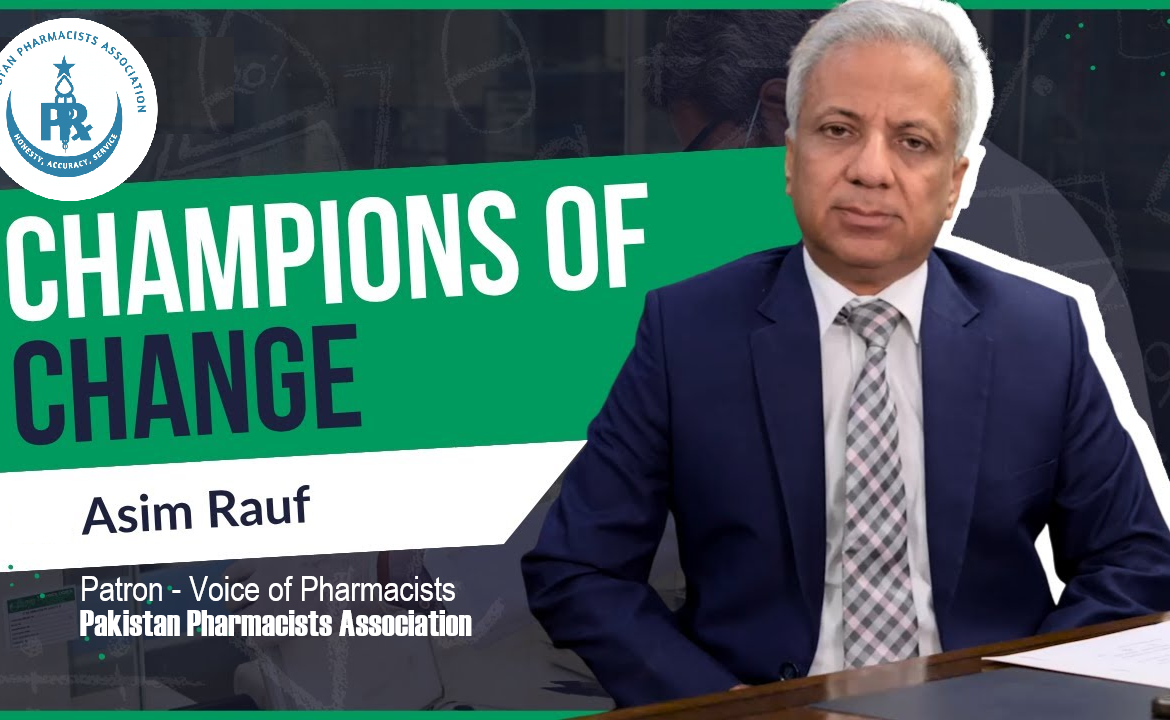
Message of Gratitude to the Pharmacist Community On behalf of Asim Rouf, presidential contestant, PPA Centre


PPA Elections – 5 December 2025

Respected Pharmacists of Pakistan,

I extend my sincere gratitude to all Pakistani pharmacists who participated, supported, observed, and critically engaged with the Pakistan Pharmacists Association elections held on 5 December 2025. Your involvement—whether through active participation, principled dissent, or constructive observation—reflects a deep commitment to the dignity, integrity, and future of the pharmacy profession in Pakistan.

While expressing gratitude, it is also necessary to place the 5 December 2025 elections within their broader historical and structural context. Since 1978, the Pakistan Pharmacists Association has repeatedly faced concerns regarding factional dominance, closed leadership circles, restricted membership, and non-transparent electoral practices. Over the decades, critics have pointed to institutional capture by entrenched groups, limited representation, the absence of independent audits, and vulnerability to external commercial and administrative influence. These long-standing structural deficiencies form the backdrop against which the 2025 election has been interpreted.

The 2025 polling process remained peaceful; however, with participation representing approximately 1.8% of Pakistan’s estimated 75,000 qualified pharmacists, serious questions regarding national mandate and representative legitimacy persist. Although no independently verified evidence of direct rigging has emerged, the continuation of historically weak governance systems—such as the lack of transparent membership records, absence of independent oversight, and non-auditable electoral mechanisms—undermines confidence in the democratic value of the outcome.

I respectfully acknowledge the concerns raised over the years regarding external influences, including pharmaceutical industry pressures, overlapping regulatory and professional roles, administrative interference, retired officials’ networks, and commercially driven interests. Such influences, whether real or perceived, weaken professional autonomy and erode trust in representative institutions.

I am especially thankful to those colleagues who stood with me in advocating for transparency, fairness, and democratic norms within our professional institutions. Your courage to raise questions, demand accountability, and uphold ethical standards has reaffirmed that the collective conscience of Pakistani pharmacists remains alive and resilient.

Regardless of differing opinions or electoral outcomes, the true strength of our profession lies in unity, professionalism, and adherence to merit-based leadership. The engagement witnessed during this electoral process reflects a growing awareness among pharmacists that institutional credibility can only be sustained through openness, inclusivity, and respect for democratic principles.

I also acknowledge and respect those who expressed concerns, reservations, or criticism during this process. Constructive criticism is essential for institutional reform, and such dialogue must continue if the Pakistan Pharmacists Association is to genuinely represent the aspirations of pharmacists across all sectors—academia, industry, healthcare, regulation, and community practice.

This election should not be seen as an end, but as a moment of reflection and a catalyst for long-term reform. To restore credibility and professional unity, the PPA must commit to meaningful structural reforms, including the establishment of a publicly accessible national membership database, digitized and independently monitored elections, annual financial and governance audits, clear conflict-of-interest rules, strict separation between regulatory bodies and professional elections, and a firm prohibition on commercial or governmental interference.

I remain committed to working with all pharmacists, irrespective of affiliation or position, to strengthen professional unity, protect pharmacists’ rights, and elevate the role of pharmacy within Pakistan’s healthcare system.

Once again, I thank every Pakistani pharmacist for your engagement, integrity, and unwavering commitment to the profession.

With respect and solidarity,

Asim Rouf
Presidential Contestant
Pakistan Pharmacists Association
5 December 2025

December 13, 2025
by PharmaReviews
0 comments

STRUCTURAL MANIPULATION, ILLEGITIMACY, AND INSTITUTIONAL CAPTURE: THE ELECTION 2025 OF PAKISTAN PHARMACISTS ASSOCIATION

Taha Nazir PhD Editor-in-Chief, Pharmaceutical Review. http://tahanazir.com/

Identifiers & Pagination: Year: 2025 | Volume: 16 | Publisher ID: 22205187.16.22

Correspondince: Taha Nazir PhD, Researcher, Worker, Writer and Journalist. Thomson Reuters – ID N-5730-2015 | ORCID ID – orcid.org/0000-0002-5308-6798 | https://tahanazir.com  

Keywords: Academic governance, faculty autonomy, bureaucratic control, attendance systems, higher education policy, research freedom, institutional ethics, accountability frameworks.

Note: This manuscript was developed using advanced artificial intelligence tools, digital data repositories, information databases, and contemporary software applications.

December 12, 2025
by PharmaReviews
0 comments

پاکستان فارماسسٹ ایسوسی ایشن کے 2025 کے انتخابات: دھاندلی، ادارہ جاتی بدعنوانی، اور منظم انتخابی ہیرا پھیری

۔ڈاکٹر طٰہٰ نذیر
Pharmaceutical Review (pharmaceuticalsreview.com)
Pharmacist Federation (Pakistan) (pharmacistfed.wordpress.com)

.

تاریخی اور  منطقی  تجزیے سے ظاہر ہوتا ہے کہ  شائد پچھلے تقریباً پانچ دہائیوں میں پاکستا ن فارماسسٹ اسوسی ایشن میں مسلسل حکمرانی کا بحران رہا ہے۔  2025 کے انتخابات بظاہر ضابطہ کار طریقے سے ہوئے، یہ ایک طویل عرصے سے قائم ایسے نظام کے اندر ہوئے جس میں محدود شرکت، شفافیت کی کمی، مخصوص گروہوں کی اجارہ داری، اور کثیر جہتی بیرونی اثرات شامل ہیں۔ پاکستان کے تقریباً 75,000 فارماسٹس میں 2 فیصد سے کم نمائندگی رکھنے والی 2025 کی قیادت کو حقیقی قومی مینڈیٹ حاصل نہیں ہے۔ آزاد نگرانی، عوامی رسائی کے حامل ممبرشپ ڈیٹا، شفاف مالیات، ڈیجیٹل آڈٹنگ یا بیرونی مانیٹرنگ کی عدم موجودگی نے ایک ایسا نظام قائم کیا ہے جس میں تکنیکی طور پر قانونی انتخابات بھی عوامی اعتماد حاصل کرنے میں ناکام ہیں۔تاریخی الزامات، جن میں ادارتی قبضہ، تجارتی مداخلت، بیوروکریٹک الجھاؤ اور سیاسی اثر شامل ہیں، سے ظاہر ہوتا ہے کہ PPA ایک مضبوط پیشہ ورانہ نمائندہ ادارے کی بجائے ایک ساختی طور پر کمزور اور اثر پذیر ادارہ ہے۔ اس کمزوری نے پیشہ ور فارماسٹس گروپ (PPG) کو 1978 سے قیادت کے عہدوں پر کنٹرول قائم رکھنے کی اجازت دی ہے۔ اعتماد بحال کرنے کے لیے PPA کو ایک بند، اثر پذیر حکمرانی کے ڈھانچے سے شفاف، جوابدہ اور ڈیجیٹل طور پر آڈیٹیبل ادارے میں تبدیل ہونا ضروری ہے۔ حقیقی اصلاحات، بشمول آزاد آڈٹ، کھلی ممبرشپ، شفاف حکمرانی اور بیرونی اثر سے سخت علیحدگی، اس کے قانونی جواز کو بحال کرنے اور پاکستان میں فارمیسی پیشے کی نمائندگی کے لیے ضروری ہیں۔

کنٹرول اور ہیر پھیر کا تاریخی پس منظر (1978–2025)

1970 کی دہائی کے آخر سے PPA مختلف طاقتور گروہوں اور دھڑوں کی اجارہ داری کے زیر اثر رہا ہے۔ نقادوں کے مطابق اس دور میں بند قیادت کے حلقے وجود میں آئے جن میں سرکاری افسران، سینئر فارماسٹس، اور سیاسی رابطوں والے افراد شامل تھے۔ PPG کو غالب دھڑے کے طور پر ابھارا گیا، جو مبینہ طور پر ممبرشپ، انتخابات اور پالیسی پر غیر متناسب کنٹرول رکھتے تھے۔ انتخابات کے نتائج کے غیر رسمی مذاکرات، اہم پوسٹس پر وفاداروں کی تقرری، ووٹر لسٹس، امیدواروں کی نامزدگی، اور کمیٹی تقرری میں ساختی ہیر پھیر کے دعوے بار بار سامنے آئے۔ حریف گروہوں یا آزاد فارماسٹس کو دبایا یا خارج کیا گیا، اور ادارتی قبضے کا ایک کلچر وجود میں آیا جہاں سرکاری عہدے پیشہ ورانہ وکالت کی بجائے بیرونی یا تجارتی مفادات کی خدمت کرتے رہے۔یہ تاریخی پیٹرنز دہائیوں تک دہرائے گئے اور 2025 کے انتخابات کی تعبیر کے پس منظر کو تشکیل دیتے ہیں۔

Continue Reading →

December 12, 2025
by PharmaReviews
0 comments

Pakistan’s Political Landscape In 2025 Reveals Deep-Seated Challenges That Mirror the PPA’s Electoral Deficiencies, Underscoring A Nationwide Crisis in Democratic Integrity.

Staff Reporter (Pharmaceutical Review) The December 5, 2025, election of the Pakistan Pharmacists Association (PPA) must be understood not in isolation but as part of a broader matrix of institutional fragility, structural exclusion, elite consolidation, and national political contention in Pakistan. Though officially described as peaceful, well-organized, and reflective of community participation, the election’s credibility and mandate are contested when analyzed against both the PPA’s own historical evolution and the contemporary political environment in Pakistan.

The PPA was founded in 1978 by Dr. Mian Naim Anwar Muzzafar, who convened practitioners across Pakistan with the aim of standardizing professional norms, advocating legislative recognition, and building a unified professional platform for pharmacists. During its early decades, the PPA expanded membership and contributed to legislative gains such as the Pharmacist Service Recognition Act and improved clinical pharmacy mandates, while initiating continuing education programs and national conventions that helped cohere the profession as a recognized health sciences discipline. These foundational achievements are documented in professional historical accounts of the association’s formation and early growth in membership and influence. LCPS

Continue Reading →

December 12, 2025
by PharmaReviews
0 comments

A COMPREHENSIVE ANALYSIS OF PAKISTAN PHARMACISTS ASSOCIATION ELECTIONS (1978–2025): PATTERNS OF INSTITUTIONAL MANIPULATION, PROCEDURAL VIOLATIONS, AND EXTERNAL INFLUENCES

Taha Nazir PhD

Editor-in-Chief, Pharmaceutical Review. https://pharmaceuticalsreview.co

    EXECUTIVE SUMMARY

    The historical and structural analysis of the Pakistan Pharmacists Association (PPA) reveals a persistent governance crisis spanning nearly five decades. The 2025 election may have been orderly in procedural terms, but it took place within a long-standing framework characterized by restricted participation, limited transparency, elite dominance, and multidirectional external influence. With less than 2% representation among Pakistan’s 75,000 pharmacists, the 2025 leadership lacks a meaningful national mandate. The absence of independent oversight, publicly accessible membership data, transparent financing, digital auditing, or external monitoring contributes to a system in which even technically lawful elections are unable to command public trust. The cumulative effect of historical allegations—ranging from institutional capture, commercial interference, bureaucratic entanglement, and political influence—suggests that the PPA functions as a structurally vulnerable and influence-prone organization, rather than a robust professional representative body. This vulnerability has allowed dominant factions, particularly the Professional Pharmacists Group (PPG), to consolidate and maintain leadership positions since 1978. To regain credibility, the PPA must transition from a closed, influence-heavy governance structure to a transparent, accountable, and digitally auditable professional institution. Genuine reform—independent auditing, open membership, transparent governance, and strict separation from external influence—is essential for restoring its legitimacy and fulfilling its mandate to represent the pharmacy profession in Pakistan.

    HISTORICAL CONTEXT OF CONTROL AND MANIPULATION (1978–2025)

    Since the late 1970s, the PPA has been shaped by persistent power blocs and factional dominance. Critics argue that this period saw:

    • Emergence of closed leadership circles consisting of government officers, senior pharmacists, and politically connected individuals.
    • Formation of PPG as the dominant faction, allegedly exercising disproportionate control over membership, elections, and policy influence.
    • Recurrent claims that election outcomes were informally negotiated, with loyalists positioned in key posts before voting.
    • Structural manipulation of voter lists, candidate nominations, and committee appointments.
    • Suppression, discouragement, or exclusion of rival groups or independent pharmacists.
    • A culture of institutional capture, where official positions allegedly served external or commercial interests rather than professional advocacy.

    These patterns—repeated across multiple decades—form the historical backdrop against which the 2025 election is interpreted.

    Continue Reading →