Phamraceutical Review (Editor- Muhammad Usman); Our respected editor Muhammad Usman B. Pharmacy, LLB (Expert Drug Law and pharmacy Jurisprudence Advocate Lahore High Court, Pakistan) has cover this case and reported to the office and staff of pharmaceutical review. Former Drug Regulatory Authority of Pakistan (DRAP) Chief Executive Officer (CEO) Shaikh Akhtar Hussain. was on Wednesday arrested when a special court rejected his bail in corruption, misuse of official position for personal gains and fake degree case. Judge Shahrukh Arjmnad of Special Court Central (FIA Court) ordered arrest of ex-DRAP CEO, Shaikh Akhtar Hussain, in corruption and misuse of his official position as DRAP chief case here.
An FIR No.50/2023 was registered by Federal Investigation Agency (FIA) against Shaikh Akhtar Hussain on the allegations of fake degree, getting Rs 2.5 million LPR encashment allowance from tax payers money after termination on the order of Hon’ble Islamabad High Court by Federal government. Ex DRAP chief is also alleged in FIR for having assets of billions of rupees which are far beyond his known source of income. In at least two National Accountability Bureau (NAB) corruption references , Shaikh Akhtar Hussain, was reported as a “Dead man”.
Being a crooked of his own class, Shaikh Akthar Hussain managed to dodge NAB to avoid his arrest for years in the corruption cases. He, being a brain child of a powerful lobby of pharmaceutical tycoons functioning in Pakistan, managed to avoid his arrest in dozens of the cases of corruption for many years. The FIR registered against Shaikh Akhtar Hussain said that ex-DRAP chief used a fake degree of PHD to grab position as CEO DRAP in December 2018 and make huge financial gains illegally.
According to the FIR, the degree presented by Shaikh Akhtar Hussain to grab post of CEO DRAP was sent through Interpol for verification from Sri Lankan University which confirmed that the degree in question was fake.
Shaikh Akhtar Hussain had developed a gang of his likeminded officials in DRAP which oversaw fake degree to install him as DRAP chief and collude with him to make financial gains. Ineresstingly, the gang of officials which managed appointment of Akhtar Hussain as DRAP chief is still present in the authority. The same gang tampers DRAP record of DRAP to dodge FIA and other agencies to protest Akhtar Hussain from any punishment.
Phamraceutical Review (Editor – Muhammad Usman); Our respected editor Muhammad Usman B. Pharmacy, LLB (Expert Drug Law and pharmacy Jurisprudence Advocate Lahore High Court, Pakistan) has cover this case and reported to the office and staff of pharmaceutical review.
Islamabad: Mother of Muhammad Usman, the owner of Everest Pharmaceuticals who was arrested from court room, is still waiting for response of Prime Minister Imran Khan on her 5-months-ago purported letter against former Chief Justice (CJ) Mian Saqib Nisar, wherein the former CJ is accused of adjudicating a case regarding drugs to favor his family members.
Usman was arrested from Supreme Court in March last year and his company was sealed by Federal Investigation Agency (FIA) after Drug Regulatory Authority of Pakistan (DRAP) had submitted report, during hearing of the case, accusing him of manufacturing and supplying spurious drugs.
However, the mother Samina Zaheer tells a different story. Leveling allegations on former CJ, she explains reasons ‘behind the curtain’ which culminated into arrest of her son. She claims that ex-CJ took notice of the drug related matters just for the sake of giving benefits to his family members, adding he heard the case which was directly in conflict of interest. According to her, she wrote a letter to Prime Minister Imran Khan in September last year in this regard. “I am writing you (Prime Minister) this application with last hope of Justice. My son (Muhammad Usman) was arrested on illegal verbal order of Honourable Chief Justice of Pakistan on 6th March 2018 and his factory was taken over illegally by Drug Regulatory Authority of Pakistan,” Samina’s purported letter stated. She says two daughters of ex-CJ Nisar are married with two sons of Mian Misbah-ur-Rehman. Mian Misbah was appointed as Federal Minister on 27th June, 2018 in interim government, she adds.
She says that Mian Misbah and his sons are the owners of three pharmaceuticals factories including Servier, PCW (Popular Chemical Works) and Schazoo.She questions whether ex-CJ Nisar could hear the cases regarding drugs, pharmaceuticals and DRAP when his family business was drugs manufacturing. “There is direct conflict of interest,” she claims. Usman’s mother questions how the suo motu could be taken on application of government official against a private person.
According to her, five officials of Ministry of Health/DRAP were nominated by National Accountability Bureau (NAB) in a corruption case in 2001 wherein four accused persons were arrested but one Sheikh Akhtar Hussain saved himself from arrest by declaring himself dead. Another corruption reference of 2004 was filed by NAB. Hussain once again saved himself by declaring himself dead. She claims that Hussain, then acting CEO DRAP, filed an application to HR Cell of Supreme Court against Usman alleging that he was manufacturing spurious and unregistered medicines and his brother-in-law Raja Riffat Mukhtar, RPO Bahawalpur, registered a number of FIRs against Hussain and other DRAP officials. Usman’s mother questions how the suo motu could be taken on application of government official against a private person. Samina Zaheer in her letter raised another question that how orders to acting CEO DRAP could be given by the court regarding inspection of Everest Pharman when he is the complainant.
It is pertinent to mention that the journalists covering Supreme Court on daily basis witnessed that ex-CJ Nisar did not allow Usman or his lawyer to speak during the course of hearing. Samina Zaheer in her letter raised another question that how orders to acting CEO DRAP could be given by the court regarding inspection of Everest Pharman when he is the complainant. She says that entire department of DRAP illegally entered Everest Pharma in the absence of even a single representative of Everest Pharma. Almost 150 officials of DRAP along with a huge number of unknown private persons remained in factory of Everest Pharma till midnight illegally and stole all documents, letterheads of Everest, medicines and Raw Materials etc. worth millions of rupees.
On the other hand, police and FIA separately investigated Raja Riffat Mukhtar, RPO Bahawalpur. Both agencies concluded that Mukhtar is one of the best officers of police with highest dignity and integrity and that neither he nor Usman filed any FIR against any official of DRAP, says the mother. She, however, leveled allegation that the then CJ called chairman NAB in his chamber instead of calling him in open court.
“My son never manufactured any spurious or unregistered medicines and he is still behind the bars since 6th March 2018. FIRs have been registered against him across Pakistan, although his factory is in Islamabad. Is it legal to register around 100 FIRs?” she says.“Then NAB, instead of explaining in open court that Sh Akhtar Hussain is a corrupt officer and his name is mentioned in two Corruption References of NAB and a new corruption inquiry has been started, tendered an apology regarding the issuance of show cause notice to Akhtar Hussain and withdrew the show cause notice,” the purported letter of Samina Zaheer stated.
“It is pertinent to mention here that Sh. Akhtar Hussain always gave extraordinary (legal or illegal) benefits to the Pharma companies of Mian Misbah-ur-Rehman (Samdhi of ex-CJ),” she stated. “My son never manufactured any spurious or unregistered medicines and he is still behind the bars since 6th March 2018. FIRs have been registered against him across Pakistan, although his factory is in Islamabad. Is it legal to register around 100 FIRs?” she says. “Can you (Prime Minister) compensate the agony and suffering of a mother due to illegal action of CJP,” her letter added.
She has further requested to initiate investigation against all corrupt officials of DRAP especially Sh. Akhter Hussain. According to the contents of letter, Hussain built an empire from his alleged corruption which include 4 Kanal Plaza (Zerena Mall) in Liberty Market, Lahore and a 4 Kanal House in Town Ship Lahore. Banami Business, according to letter, include 5 Pharma factories in Pakistan, 1 Pharma Factory each in India, China and Turkey, Biggest Pharma distribution in Lahore, Marz Pharmacy College Lahore and a GS1 Pakistan Company to provide software for printing of barcodes on medicines. However, when asked, she repeatedly avoided to produce any reference which could substantiate that Prime Minister Secretariat or Prime Minister House received the complaint/letter. However, the timeline and some factual background she narrates have some relevance to allegations. It is worthy to mention that the appropriate forum to file complaint against a judge is Supreme Judicial Council (SJC) and not Prime Minister. Chief Justice heads SJC as its Chairman. However legal experts believe that raising questions on veracity of allegation is hard keeping in view the contents of purported letter. Some from legal fraternity told this correspondent that if the matter, if investigated transparently, could constitute the charge of misuse of authority. Some of the lawyers, who had been critique of ex-CJ Nisar in his tenure, said that this is not the only case wherein such kinds of allegations are being leveled.
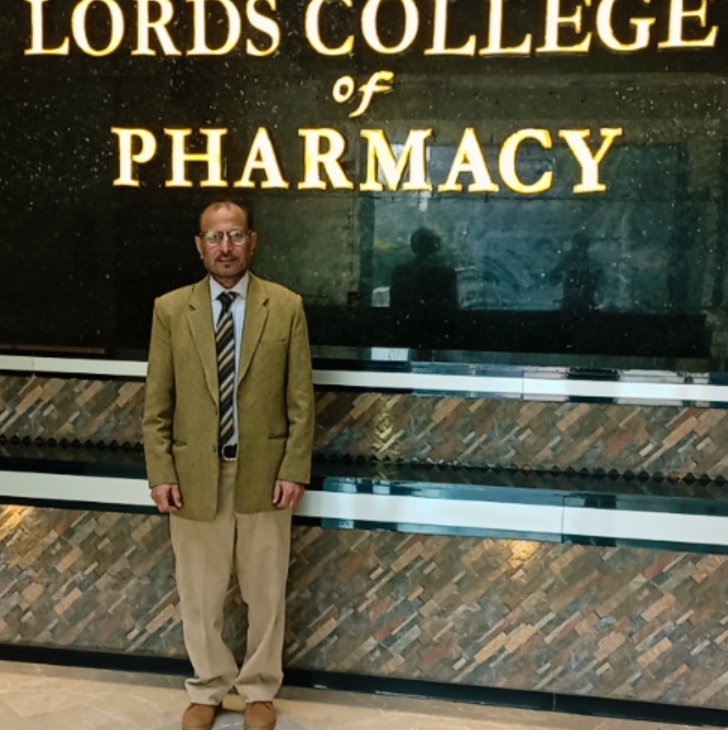
Pharmaceutical Review (Special Reporter). An icon of corruption and legend of dishonesties Dr. Sajid Bashir (Retired) has surprisingly got another chance to spoil the pharmacy profession. He is appointed as principal of a private teaching institution Lords College of Pharmacy, 53-M, Quaid-e-Azam Industrial Estate, Kot Lakhpat, Lahore, Pakistan in February 2021. That confirm the poor recruitment procedure, low teaching quality and business minded approach of the management of this institution. Because the corruption, dishonesties and irregularities of this idiot are internationally recognized and established. The detail is published and available online.
Principal of Lord College of Pharmacy, Lahore, Pakistan.
Additionally, this appointment mocks the quality assurance, official government policies and education standard in Pakistan. Because this stupid is symbolling all possible ways of corruptions in pharmacy academia. He has long and terrible history of corruption, and dishonesties as under,
An amazing character revealing the fundamental factors hurting the health standards, pharmaceutical patient’s care and teaching quality in developing countries.ادویات و صحت کے نظام کو مجروح کرنیوالی حقیقی اور مثالی شخصیت۔ http://dx.doi.org/10.52182/22205187.13022021 https://pharmareview.files.wordpress.com/2021/03/28-2021-feb-13-corruption-of-dean.pdf
The corruption of dean pharmacy, university of Sargodha needs attention and appropriate investigation. جامعہ سرگودہا کے شعبہ فارمیسی کے سرپرست کی بددیانتی وبد عنوانی۔ http://dx.doi.org/10.52182/22205187.7122018 | https://pharmareview.files.wordpress.com/2018/12/12-uos-corruption.pdf |
Pharmacy council of Pakistan, pharmacy discipline and pharmacist community. پاکستان فارمیسی کونسل کی ناکامی کا سدباب اور اسکے نظام صحت پر اثراب۔ http://dx.doi.org/10.52182/22205187.07112021 | https://pharmareview.files.wordpress.com/2021/11/2021-nov-7-pcp-role-2.pdf
An ideological compliance to establish the real state of Pakistan. فکری قومی تعبیر سے عملی ملکی تعمیر کا حقیقی سفر۔ http://dx.doi.org/10.52182/22205167.25062020 | https://pharmareview.files.wordpress.com/2020/07/dr.-taha-june-25-2020.pdf
Correction of pharmaceutical teaching institution is the start point of professional growth.ادویاتی تعلیمی اداروں کی اصلاح، پیشہ فارمیس کی ترقی و خوشحالہ کا نقطہ آغاز۔ http://dx.doi.org/10.52182/22205187.13122016 | https://pharmareview.files.wordpress.com/2016/12/academic-and-admin-role.pdf
You will always be in our heart and memories تماری یادیں بسی ہیں دل میں افق کے اس پار جانے والو۔ http://dx.doi.org/10.52182/22205167.132022019 | http:/pharmareview.files.wordpress.com/2020/01/16-iqbal-and-dr.-rifat-3.pdf
Lest we forget; Muhammad Iqbal (late) and dr. Riffat ul zaman (late)شہدافارمیسی کی عظمت کو سلام۔ http://dx.doi.org/10.52182/22205187.11022019 | https://pharmareview.files.wordpress.com/2019/02/13-iqbal-and-dr.-rifat-.pdf
M. Iqbal (late) – great leader, skilled pharmacist and outstanding person. عزت مآب محمد اقبال کی عظمت کو سلام ۔ http://dx.doi.org/10.52182/22205187.27082019 | https://pharmareview.files.wordpress.com/2019/08/13-iqbal-1-1.pdf
Pharmaceutical “fact sheet” 2014-15; released by prof. Dr. Taha nazir president pharmacist federation (Pakistan ) and pharmacist alliance, PPA. پیشہ فارمیسی کا حقائق نامہ 2014-2015 | http://dx.doi.org/10.52182/22205167.25012015 | https://pharmareview.files.wordpress.com/2015/01/21-fact-sheet-2014-15.pdf
The dilemma of pharmacy profession in Pakistan; a “white paper” regarding ppa election 2014پیشہ فارمیس کا المیہ ۔ قرطاس ابیٖض۔ | http://dx.doi.org/10.52182/22205187.21072014 | https://pharmareview.files.wordpress.com/2014/08/white-paper-election-corruption-2014.pdf
Lest we forget to our legend heroes تمہاری یادیں بسیں ہیں دل میں افق کے اس پار جانے والو۔ http://dx.doi.org/10.52182/22205187.19012020 | https://pharmareview.files.wordpress.com/2021/03/15-iqbal-and-dr.-rifat.pdf
Prudential review of pharmacy teaching institutions in Pakistan. پیشہ فارمیسی کے ملکی تدریسی اداروں کا تجزیاتی جائزہ۔ http://dx.doi.org/10.52182/22205187.14062015 | https://pharmareview.files.wordpress.com/2015/06/academic-corruption-ff5.pdf
Review of evolving role and poor representation of pharmacy professional in Pakistan. ماہرین ادویات کی ناقص نمائندگی اور پیشہ ورانہ بد حالی کی وجوہات و اسباب۔ | http://dx.doi.org/10.52182/22205187.25032016 | https://pharmareview.files.wordpress.com/2016/03/poor-rep-and-bad-prof-situa-of-pharm-prof-ff.pdf
Review of dissimilar roles, responsibilities and official duties of licensing (qualified person) and employee (working) pharmacists. قانونی اور ملازم فارماسسٹ کے پیشہ ورانہ کردار کا اصولی فرق۔ http://dx.doi.org/10.52182/22205187.13032017 | https://pharmareview.files.wordpress.com/2017/03/13-difference-among-the-licensing-and-employeed-pharmacist1.pdf
The poor and illegal representation of pharmacy profession in Pakistan. پاکستان کا غیر معیاری ادویاتی نظام اور غیر اخلاقی پیشہ ورانہ نمائندگی ۔ http://dx.doi.org/10.52182/22205187.02022014 | https://pharmareview.wordpress.com/2014/02/02/poor-pharmaceutical-care-and-illegal-professional-representation-of-pharmacy-profession-in-pakistan/
Insufficient effort of the government of the punjab to improve the local health care. حکومت پنجاب کے ادویاتی قوانین اور نظام صحت کے غیر یقینی اور ادہورے اقدامات۔ | http://dx.doi.org/10.52182/22205187.03082017 | https://pharmareview.files.wordpress.com/2017/03/8-insufficient-contribution.pdf
The potential reasons of poor representation and despicable professional situation in Pakistan.ماہرین ادویات کی ناقص نمائیدگی اور پیشہ ورانہ بد حالی کی وجوہات و اسباب۔ | http://dx.doi.org/10.52182/22205187.03082017
Pharmaceutical Reviews (Associate Editor) The most frequent form of epileptic seizures, called focal seizures, take place when nerve cells in a specific area of the brain send out an abrupt, uncontrolled burst of electrical signals. This uncontrolled activity can cause strange behavior, moments of loss of awareness, and mood swings in addition to seizures. Although there are many treatments for controlling or reducing seizures, roughly one-third of patients still experience seizures, and some treatments may have serious adverse effects, according to specialists. According to a recent clinical trial led by experts at NYU Grossman School of Medicine, patients who added XEN1101 to their existing antiseizure medications had a 33% to 53% reduction in monthly seizures, depending on their dose. The eight-week treatment portion of the research saw an average 18% decrease in seizures in those who received a placebo. The majority of patients then agreed to continue the experiment, with the new medication helping around 18% of patients remain completely seizure-free after six months and about 11% of patients remain seizure-free after a year or longer.
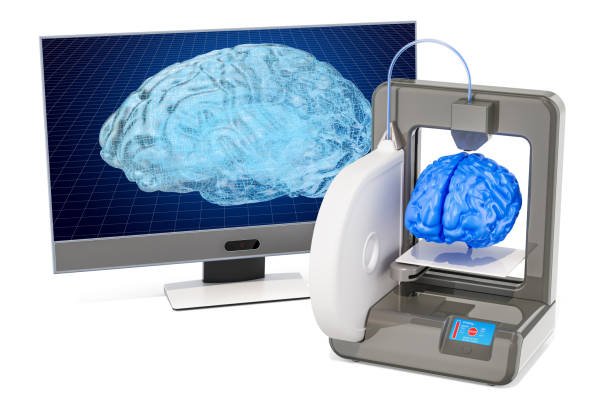
Pharmaceutical Review (Associate Editor) By 3D printing human stem cells, researchers have created an artificial tissue that resembles a condensed cerebral cortex. The structures merged with the host tissue when inserted into mouse brain slices. The ground-breaking method created by University of Oxford researchers may one day offer specialized fixes for those who sustain brain damage. For the first time, the researchers showed that neuronal cells may be 3D printed to resemble the cerebral cortex’s structure. The findings were released in the journal Nature Communications today. The cerebral cortex, or outer layer of the brain, is frequently severely damaged in brain injuries, including those brought on by trauma, stroke, and surgery for brain tumors. This causes problems with cognition, movement, and communication. For instance, each Globally, traumatic brain injury (TBI) affects around 70 million people, with 5 million of these instances being severe or fatal. For severe brain injuries, there are currently no effective treatments, which has a significant impact on quality of life.Researchers at the University of Oxford used 3D printing to create a two-layered brain tissue. The cells convincingly integrated structurally and functionally into mouse brain slices after implantation.
Pharmaceutical Review (Associate Editor) All of the major food groups, including lean proteins, whole grains, healthy fats, and colorful fruits and vegetables, are typically represented in a healthy diet by nutrient-dense foods. Trans fats, added salt, and sugar-containing meals should be swapped out for more nutrient-dense alternatives as part of healthy eating practices. A nutritious diet has several advantages, such as strengthening bones, defending the heart, preventing sickness, and elevating mood. The connection between trans fats and conditions connected to the heart, like coronary heart disease, has long been understood by the medical profession. By preventing cell damage, consuming foods rich in antioxidants can help people lower their risk of getting cancer. Beta carotene, lycopene, and vitamins A, C, and E are just a few of the phytochemicals that can be found in fruits, vegetables, nuts, and legumes and function as antioxidants.
Pharmaceutical Review (Associate Editor) Obesity is currently a global problem that increases the chance of developing chronic illnesses including diabetes and heart disease. Despite the fact that junk food can contribute to obesity, our fast-paced way of life has made it more commonplace. When you are balancing school, sports, and hanging out with friends and family, life may be extremely busy. As a result of the convenience, deliciousness, and affordability of junk food, cooking and eating wholesome prepared meals has mostly been supplanted. Junk food includes items from fast food chains like burgers, fried chicken, and pizza as well as packaged items like chips, biscuits, and ice cream, sugar-sweetened beverages like soda, fatty meats like bacon, sugary cereals, and frozen ready meals like lasagna. Typically, these meals have undergone extensive processing.
Pharmaceutical Reviews( Associate Editor) The Central Nervous System (CNS), which includes the brain, is the final major unexplored area in biomedicine. The principles of the brain/CNS are substantially unknown when compared to other organs and systems, such as the heart/circulatory system. The brain is much less understood than other human organs in terms of structure-function correlations and cell-cell communication. Recently, research institutes devoted to the study of the brain have been established, informal networks of scholars such as the European Brain Council have been built, and numerous millions of dollars have been invested in research grants and biotech initiatives, but we are just now beginning to lay the groundwork.
Pharmaceutical Review (Associate Editor) The ecology of diseases changes along with the climate. The evolution of metabolic illnesses changes along with human gastronomy. The resurgence of once-nearly eliminated illnesses reflects changes in human beliefs. Life expectancy also changes as a result of human lifestyle. All told, the spread of subtropical pathogens (like the Dengue virus) into the north, the rise of high-calorie diets as a public health concern in more and more parts of the world, the acceptance of anti-vaccine ideologies that have led to the resurgence of previously controlled diseases like the measles, and the impending threat of cardiovascular diseases to life expectancy are causing the global map of endemic malignancies to change rapidly.