|
June 6, 2015
by PharmaReviews
0 comments


June 6, 2015
by PharmaReviews
0 comments
|
June 6, 2015
by PharmaReviews
0 comments
Posters are a key component of communicating your science and an important element in a successful scientific career. Posters, while delivering the same high-quality science, offer a different medium from either oral presentations [1] or published papers [2], and should be treated accordingly. Posters should be considered a snapshot of your work intended to engage colleagues in a dialog about the work, or, if you are not present, to be a summary that will encourage the reader to want to learn more. Many a lifelong collaboration [3] has begun in front of a poster board. Here are ten simple rules for maximizing the return on the time-consuming process of preparing and presenting an effective poster.
The purpose will vary depending on the status and nature of the work being presented, as well as the intent. Some posters are designed to be used again and again; for example, those making conference attendees aware of a shared resource. Others will likely be used once at a conference and then be relegated to the wall in the laboratory. Before you start preparing the poster, ask yourself the following questions: What do you want the person passing by your poster to do? Engage in a discussion about the content? Learn enough to go off and want to try something for themselves? Want to collaborate? All the above, or none of the above but something else? Style your poster accordingly.
Some conferences will present hundreds of posters; you will need to fight for attention. The first impressions of your poster, and to a lesser extent what you might say when standing in front of it, are crucial. It is analogous to being in an elevator and having a few seconds to peak someone’s interest before they get off. The sad truth is that you have to sell your work. One approach is to pose your work as addressing a decisive question, which you then address as best you can. Once you have posed the question, which may well also be the motivation for the study, the focus of your poster should be on addressing that question in a clear and concise way.
The title is a good way to sell your work. It may be the only thing the conference attendee sees before they reach your poster. The title should make them want to come and visit. The title might pose a decisive question, define the scope of the study, or hint at a new finding. Above all, the title should be short and comprehensible to a broad audience. The title is your equivalent of a newspaper headline—short, sharp, and compelling.
Do not take the acceptance of a poster as an endorsement of your work. Conferences need attendees to be financially viable. Many attendees who are there on grants cannot justify attending a conference unless they present. There are a small number of speaking slots compared with attendees. How to solve the dilemma? Enter posters; this way everyone can present. In other words, your poster has not been endorsed, just accepted. To get endorsement from your peers, do good science and present it well on the poster.
Identify your audience and provide the appropriate scope and depth of content. If the conference includes nonspecialists, cater to them. Just as the abstract of a paper needs to be a succinct summary of the motivation, hypothesis to be tested, major results, and conclusions, so does your poster.
The amount of material presented in a paper far outweighs what is presented on a poster. A poster requires you to distill the work, yet not lose the message or the logical flow. Posters need to be viewed from a distance, but can take advantage of your presence. Posters can be used as a distribution medium for copies of associated papers, supplementary information, and other handouts. Posters allow you to be more speculative. Often only the titles or at most the abstracts of posters can be considered published; that is, widely distributed. Mostly, they may never be seen again. There is the opportunity to say more than you would in the traditional literature, which for all intents and purposes will be part of the immutable record. Take advantage of these unique features.
Pop musician Keith Richards put the matter well in an interview with Der Spiegel [4]: “If you are a painter, then the most important thing is the bare canvas. A good painter will never cover all the space but will always leave some blank. My canvas is silence.” Your canvas as poster presenter is also white space. Guide the passerby’s eyes from one succinct frame to another in a logical fashion from beginning to end. Unlike the literature, which is linear by virtue of one page following another, the reader of a poster is free to wander over the pages as if they are tacked to the poster board in a random order. Guide the reader with arrows, numbering, or whatever else makes sense in getting them to move from one logical step to another. Try to do this guiding in an unusual and eye-catching way. Look for appropriate layouts in the posters of others and adopt some of their approaches. Finally, never use less than a size 24 point font, and make sure the main points can be read at eye level.
Everything on the poster should help convey the message. The text must conform to the norms of sound scientific reporting: clarity, precision of expression, and economy of words. The latter is particularly important for posters because of their inherent space limitations. Use of first-rate pictorial material to illustrate a poster can sometimes transform what would otherwise be a bewildering mass of complex data into a coherent and convincing story. One carefully produced chart or graph often says more than hundreds of words. Use graphics for “clear portrayal of complexity” [5], not to impress (and possibly bewilder) viewers with complex artistry. Allow a figure to be viewed in both a superficial and a detailed way. For example, a large table might have bold swaths of color indicating relative contributions from different categories, and the smaller text in the table would provide gritty details for those who want them. Likewise, a graph could provide a bold trend line (with its interpretation clearly and concisely stated), and also have many detailed points with error bars. Have a clear and obvious set of conclusions—after the abstract, this is where the passerby’s eyes will wander. Only then will they go to the results, followed by the methods.
A poster is a different medium from a paper, which is conventionally dry and impersonal. Think of your poster as an extension of your personality. Use it to draw the passerby to take a closer look or to want to talk to you. Scientific collaboration often starts for reasons other than the shared scientific interest, such as a personal interest. A photo of you on the poster not only helps someone find you at the conference when you are not at the poster, it can also be used to illustrate a hobby or an interest that can open a conversation.
When the considerable effort of making a poster is done, do not blow it on presentation day by failing to have the poster achieve maximum impact. This requires the right presenter–audience interaction. Work to get a crowd by being engaging; one engaged viewer will attract others. Don’t badger people, let them read. Be ready with Rule 2. Work all the audience at once, do not leave visitors waiting for your attention. Make eye contact with every visitor.
Make it easy for a conference attendee to contact you afterward. Have copies of relevant papers on hand as well as copies of the poster on standard-sized paper. For work that is more mature, have the poster online and make the URL available as a handout. Have your e-mail and other demographics clearly displayed. Follow up with people who come to the poster by having a signup sheet.
The visitor is more likely to remember you than the content of your poster. Make yourself easy to remember. As the host of the work presented on the poster, be attentive, open, and curious, and self-confident but never arrogant and aggressive. Leave the visitors space and time—they can “travel” through your poster at their own discretion and pace. If a visitor asks a question, talk simply and openly about the work. This is likely your opportunity to get feedback on the work before it goes to publication. Better to be tripped up in front of your poster than by a reviewer of the manuscript.
Good posters and their presentations can improve your reputation, both within and outside your working group and institution, and may also contribute to a certain scientific freedom. Poster prizes count when peers look at your resume.
These ten rules will hopefully help you in preparing better posters. For a more humorous view on what not to do in preparing a poster, see [6], and for further information, including the opportunity to practice your German, see [7].
Thomas Erren’s contributions to this piece are based on [7] and were stimulated by exchanges with Michael Jacobsen. Thanks also to Steven E. Brenner for useful input.
Source: https://journals.plos.org/ploscollections/article?id=10.1371/journal.pcbi.0030102
June 2, 2015
by PharmaReviews
0 comments

June 2, 2015
by PharmaReviews
0 comments

June 2, 2015
by PharmaReviews
0 comments
 Vermont has picked health over fear. On Thursday, May 28, Governor Peter Shumlin signed a bill removing the so-called “philosophical exemption.” As of July 1, 2016 Vermont children will no longer be put at risk of contracting preventible diseases because of parental choice.
As often happens when reason confronts fear, the fear gets louder and more entrenched. So, it should be no surprise that the debate in Vermont turned rancorous and nasty. But the Governor, who previously disagreed with the removal, came around and did so gently. There was no public signing where victors might gloat. Instead, he issued the following announcement:
“Vaccines work and parents should get their kids vaccinated. I know there are strong feelings on both sides of this issue. I wish the legislation passed three years ago had worked to sufficiently increase vaccination rates. However we’re not where we need to be to protect our kids from dangerous diseases, and I hope this legislation will have the effect of increasing vaccination rates.”
The failed three-year old legislation he referred to attempted to raise vaccination rates by requiring parents to review the following educational materials: “Required Parent Education for Completion of the Religious or Philosophical Exemption Form in Vermont.” It’s kind of a dry, not very persuasive document. But Vermont did try in other ways. Their Dept. of Health has an excellent web-site, “It’s Ok to Ask,” with lots of easily accessible information.
Syringes filled with flu vaccine sit on a table during a drive-thru flu shot clinic at Doctors Medical Center on November 6, 2014 in San Pablo, California. (Photo by Justin Sullivan/Getty Images)
What this teaches is that education in basic science cannot overcome all the irrational fear fomented by the anti-vaccine movement. For some, being an anti-vaxer is a quasi-religious belief system impervious to data and reason. It becomes an identity, one worth fighting for. And, unfortunately, lots of good people get caught in the irrational slipstream created by the orthodox anti-vaxers.
There is another dimension to this rancorous debate that has nothing to do with science and health. It is the question of parental rights. Michael Specter, writing in the the NewYorker, cites Representative Warren Kitzmiller, of Montpelier:
“There is something deep in the core of my being. And it simply will not allow me to vote to remove a parent’s right to make this serious decision on what is in the best interest of their child.”
Specter goes on to call this “a reasonable position.” Before leaving this topic, after two previous posts, I’d like to suggest it is not. It is not a reasonable position. A “parental right” not to vaccinate is the rhetoric of freedom and choice gone mad. Choosing to not vaccinate an otherwise healthy child is no more a reasonable exercise of parental rights than it is for a parent to decide that it is in the best interests of their child to never have them use a car seat or seatbelt.
Source: https://www.forbes.com/sites/toddessig/2015/05/30/vaccinations-vermont-chooses-health-over-fear/
May 31, 2015
by PharmaReviews
0 comments
May 31, 2015
by PharmaReviews
0 comments
May 31, 2015
by PharmaReviews
0 comments
May 31, 2015
by PharmaReviews
0 comments
Pakistan was officially become independent on 14 August 1947. Since then the problems started to arose that made Pakistan to stand on a critical juncture.
A lot of setbacks to Pakistan internationally has been given by some of the scandals that been brought in the history of this beautiful country by certain possibilities and by which Pakistan had to face a lot of consequences in the world.
Below we will discuss the top ten biggest scandals in Pakistan’s history that gave Pakistan huge problems.
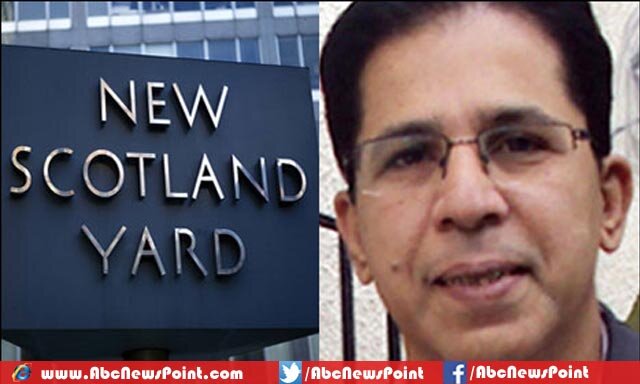
MQM’s former senior leader and a great politician were killed in London in 2010. It was considered as a political espionage because there were a lot a rumours that he was about to break the MQM party and will make a new rival Party.
But all in vain either those were rumours or not this man was killed brutally and without a shadow of a doubt, a great controversy lies in this case.
Shahzaid Murder Case is also a big scandal because it makes the public to engage to their televisions screen for what about to happen. He was a university student who was killed by his fellow friends on a night. After that Shahrukh Jatoi and Siraj Talpur was arrested and was become accused to murder of Shahzaib Khan.
There were sentenced deaths by the court. But the controversy lays in this point that after all the hype, Shahzaib’s parents started to pardon the murderers for the sake of Allah.

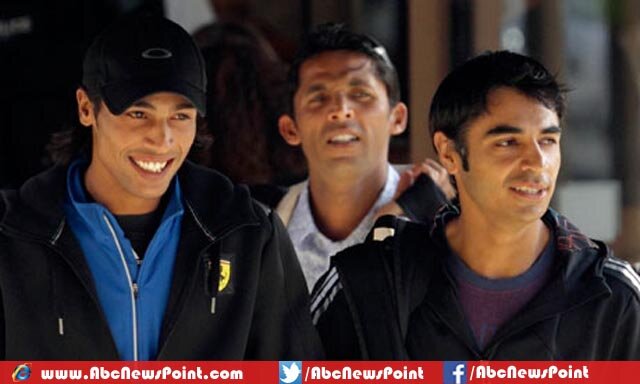
It was a cricket scandal that comes up in 2010 when Pakistan was on a tour in England. Three Pakistani players Mohammad Asif, Mohammad Amir and Salman Butt were banned from cricket by the ICC.
It all happened when a bookmaker of cricket Mazhar Majeed was secretly taped by some journalists and in that tape he confessed the crimes that both bowlers will ball no balls several times and will give bad performances. Later on all three cricketers confessed their shameful behaviour.
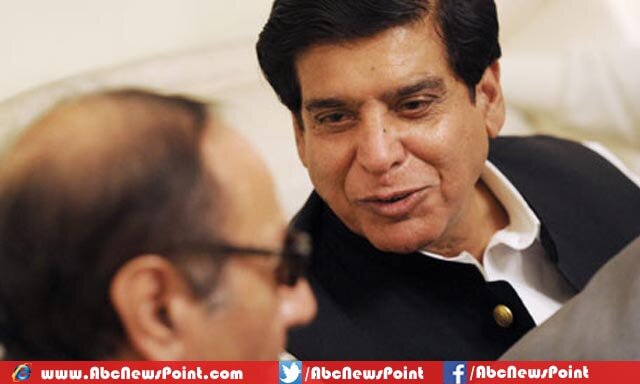
This is a political case that lead the government of PPP in 2013 in chaos, because the Prime Minister was founded involved in the corruption.
Raja Pervaiz Ashraf ex Prime Minister of Pakistan was the Minister of Power and Water and was given a loan by the governments budget for making new power plants which were not used for what it all was loaned. Supreme Court took suo moto and ordered to arrest the Prime Minister for illegally taking the money.
Raymond Davis was charged with murder of two respectable citizens of Pakistan and also keeping illegal arms in custody.
While he was charged he set free on 2011 but it gave rise to hatred among the Pakistani people that how can he be free. But for that to happen he had paid compensation of 2.4 million dollars to the families of the killed men. Which we called in our law, ‘DIYAT‘.
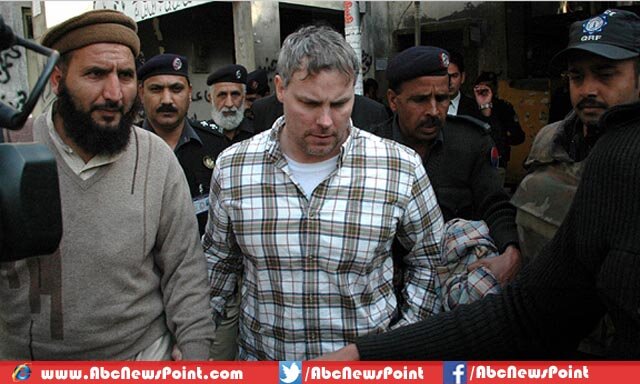
Axact, the Pakistan’s largest software company, involved in worst cyber crime ever in the world by selling fake degrees and diplomas to international customer having fake attestation and authentication from State Department featuring signature of Secretary of State John Kerry.
Axact has gigantic education empire of online study but these are for to grab international customer using marketing techniques showing number of universities on the internet offering degrees in almost every discipline, the hundreds of universities and high schools are on internet which seems to be real but actually fake.
Pakistan authorities have started investigation against Axact and Federal Investigation Agency (FIA) has reportedly seal two offices held in Karachi and arrested shoaib shaikh(CEO) of Axact and around 45 people including staff and employees while most of office infrastructure like Laptops, computers, mass storage devices and important documents has been taken into custody until inquiry would be concluded.

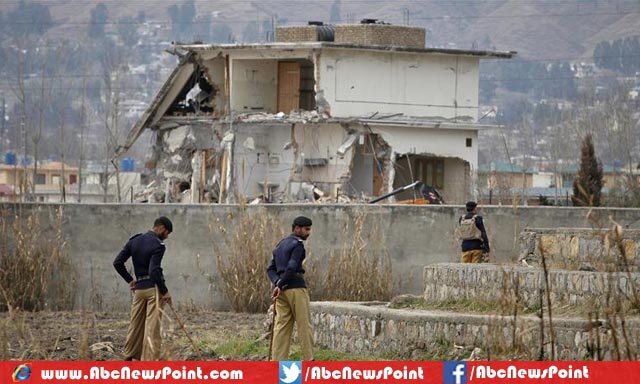
Abbottabad Operation will go down in history as a success to USA armed forces but a failure for Pakistani armed forces.
Cut the long story short US become successful to finally get their revenge over the most wanted man by them Osama Bin Laden by killing him in abbottabad. It create more unrest for Pakistan as the fundamentalist Taliban parties began to hurt Pakistan for not stopping the operation.
Aafia Siddiqui is a citizen of Pakistan who was studying in USA. Basically she went to USA for higher studies and achieved her goal in 2001 when he passed the PhD and finally become a doctor.
Once she come back to her homeland in 2003, same year she was put in the wanted list by the FBI because of an accusation that she had relationship with AL-Qaida and the militant troops in Afghanistan and on the same page is making chemical bombs for them. All this scandal lead to great number of controversy and after a long trial in US she was sentenced for life imprisonment.

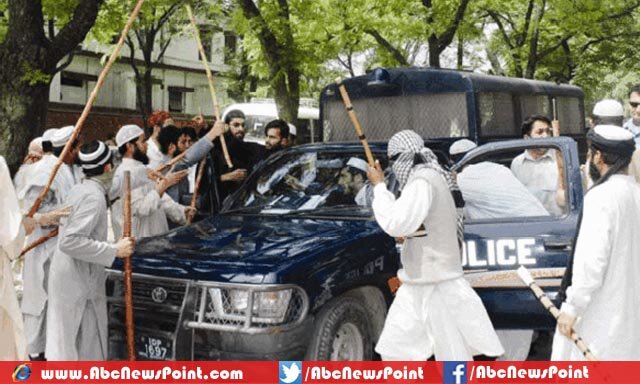
Lal Masjid Operation was a confrontation among the General Musharraf’s government and the Islamic fundamentalists in July 2007. It gives rise to a great deal of problems for the democracy of Pakistan and its image in the world.
This scandal was a simple one, the fundamentalists in the lal Masjid and the Madrassa Hafsa was doing some illegal things which the government should not permit like carrying of arms, training of students in arms etc. So it was a big step took by General Musharraf but all in vain. IT caused more problems than solving.
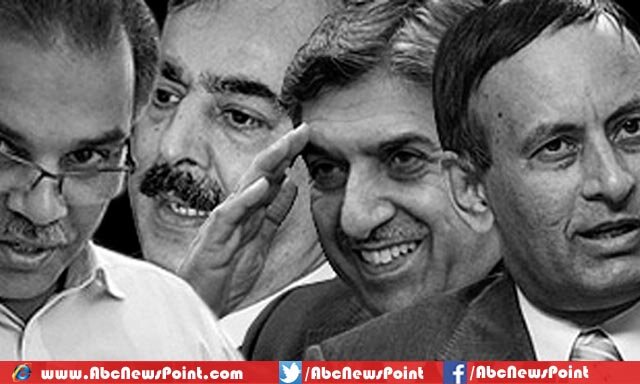
Memogate Scandal is probably the biggest scandal in Pakistan to date because it has given rise to a great number of controversies and brought Pakistan to a place where it had to take decisions very carefully for keeping their good relations with countries of the world.
All this was started when A Pakistani Diplomatic envoy in USA Hussain Haqqani secretly sent a letter to the High Command (establishment) of USA. It all gets interesting when it was revealed that he also was responsible for given secretly, unlawfully visas to the American CIA agents and other intelligence groups like Raymond Davis.
ABC News Point: https://www.abcnewspoint.com/top-10-biggest-pakistani-scandals-in-history-of-pakistan/
May 29, 2015
by PharmaReviews
0 comments
Pharmaceutical Review (www.pharmarev.com); The certificates regarding the successful completion of “Research Studies” has been distributed in Faculty of Pharmacy, University of Sargodha (UOS), Sargodha, Pakistan. The program was organized by Prof. Dr. Taha Nazir and SAFE (Study Aid Foundation for Excellency-https://www.facebook.com/pages/SAFE-UOS/1594044347500783), UOS. The students of Pharm-D has compiled the research study of Pharmaceutical Microbiology & Immunology; that have also been published in different scientific research journals.
